
Oklahoma truck buyer's guide · 2027 model-year focus
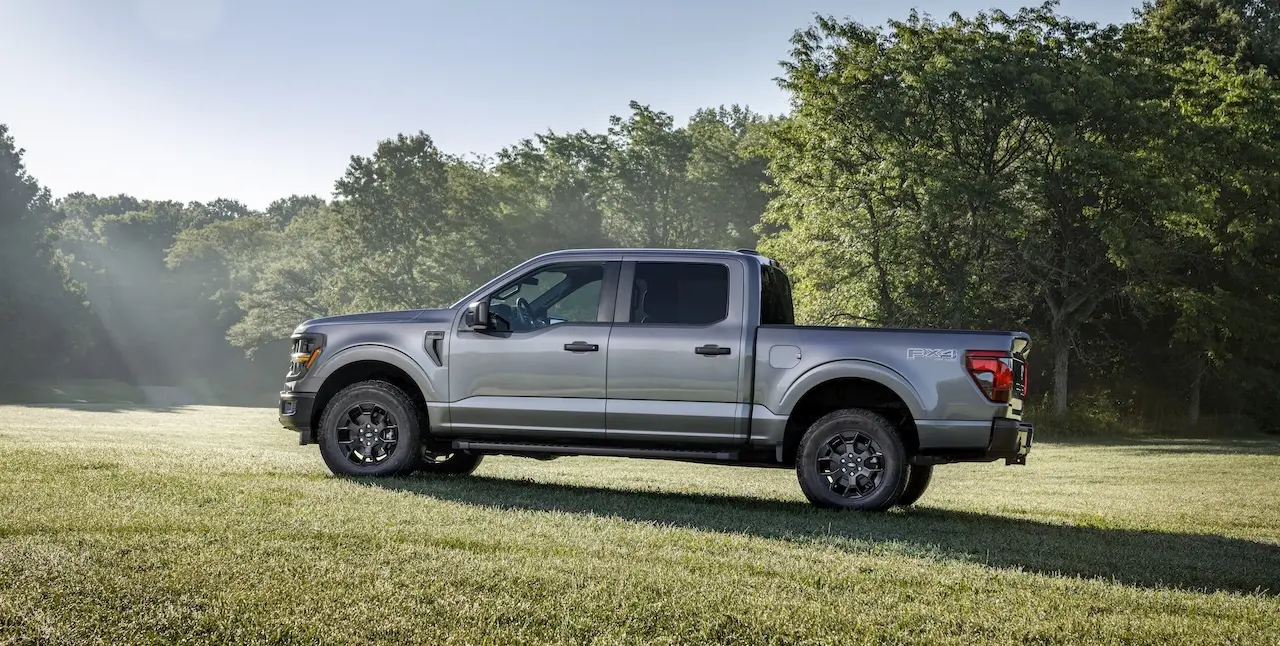
The Ford F-150 PowerBoost® Hybrid pairs a 3.5L EcoBoost® V6 with electric-motor assistance to deliver strong full-size pickup capability, impressive torque and available in-bed electrical power. For drivers around Yukon, Oklahoma City and Canadian County, it is worth a close look if you want a truck for commuting, towing, worksite use and weekend travel—without switching to a plug-in charging routine.
2027 model-year figures are equipment-dependent. Ford's towing guide lists 420 hp for the PowerBoost row while Ford's retail specifications list 430 hp; both list 570 lb-ft. Maximum tow and payload are separate limits. Confirm the exact vehicle build and current guide.
How the Ford F-150 PowerBoost Hybrid works
PowerBoost is Ford's full-hybrid F-150 powertrain. It combines a 3.5L EcoBoost V6 gasoline engine with an electric motor and hybrid battery, with the system managing how the two power sources work together. Depending on driving conditions and power demand, the truck can use electric assistance, gasoline power or a blend of both.
During deceleration and braking, regenerative braking can recover some of the vehicle's kinetic energy and return it to the hybrid battery. The driver does not need to plug the truck into a wall charger as part of normal operation. That distinguishes PowerBoost from a plug-in hybrid and from the all-electric F-150 Lightning: PowerBoost remains a gasoline-powered truck with an integrated hybrid system.
You fuel it with gasoline, drive it like an F-150 and let the hybrid controls manage electric assistance. There is no home charging schedule to add to your routine.
Hybrid operation does not mean the engine is off all the time, nor does it guarantee a particular fuel-economy result. Speed, temperature, traffic, terrain, tires, accessories, payload and trailer use all affect real-world consumption.
2027 Ford F-150 PowerBoost specs and availability
For 2027, Ford lists the 3.5L PowerBoost Full Hybrid V6 as available on select F-150 trims. Ford's retail model information lists 430 horsepower and 570 lb-ft of torque. Ford's 2027 towing guide lists 420 horsepower and 570 lb-ft for its PowerBoost entry. For towing decisions, use the towing guide and the exact truck configuration rather than treating a headline engine figure as a tow rating.
| Specification | 2027 PowerBoost | What to check |
|---|---|---|
| Engine | 3.5L EcoBoost Full Hybrid V6 | Confirm the exact vehicle window sticker |
| Horsepower | 430 hp retail specification; 420 hp in towing guide table | Ford's documents differ; see source note below |
| Torque | 570 lb-ft | Combined system rating |
| Maximum available towing | Up to 12,100 lb | Proper equipment required; varies by build |
| Pro Power Onboard | Available 2.4-kW and 7.2-kW configurations | Outlet type and output depend on equipment |
| Hybrid charging | Onboard self-managed hybrid system | No external plug-in charging routine |
Sources: Ford's 2027 F-150 retail specifications and 2027 RV & Trailer Towing Guide. The towing guide lists the PowerBoost at 420 hp / 570 lb-ft, 12,100 lb max available towing and 2,040 lb max available payload. Ford's retail specifications list 430 hp / 570 lb-ft. Use the exact vehicle's labels and guide for purchase and towing decisions.
Ford lists PowerBoost availability on select STX, XLT, Lariat, King Ranch and Platinum configurations. Availability can vary with cab, bed, drivetrain, package and production constraints, so confirm the actual vehicle rather than assuming every combination can be ordered with the hybrid.
Why PowerBoost can make sense for Oklahoma drivers
Oklahoma truck use is rarely one-dimensional. A pickup might handle a weekday commute into Oklahoma City, supply runs around Yukon, highway miles on I-40 or the Kilpatrick Turnpike, and then tow a boat, camper or utility trailer on the weekend. PowerBoost is interesting because it combines a conventional gasoline-truck format with hybrid assistance and available exportable electrical power.
Commuting and errands
Stop-and-go traffic and frequent speed changes can create opportunities for hybrid assistance and regenerative braking. The benefit depends on the route and conditions; steady high-speed highway driving can produce a different result.
Work and equipment
Available Pro Power Onboard can supply compatible tools, chargers and lighting at a jobsite. Confirm the truck's actual outlet package and wattage before planning a workday around it.
Camping and recreation
Integrated outlets can be convenient for compatible campsite equipment and weekend projects. Check appliance startup loads and the truck's rated output before connecting devices.
Longer Oklahoma trips
A gasoline-powered hybrid can be attractive if you travel between communities or across the state and prefer not to plan trips around external charging stations.
Hot summers, cold snaps, strong winds and heavy rain can affect fuel use and electrical demand. Pro Power Onboard may add flexibility, but it should not be treated as an automatic whole-home backup system. Follow the owner's manual, use approved equipment and have any home transfer connection installed by a qualified electrician.
F-150 PowerBoost fuel economy: what EPA data says
The EPA's published 2026 ratings provide a useful, clearly labeled reference point. For the 2026 F-150 4WD Hybrid, the EPA lists 22 MPG city, 24 MPG highway and 23 MPG combined. The 2026 4WD F-150 with the conventional 3.5L gasoline V6 is listed at 17 city, 23 highway and 19 combined MPG.
| 2026 F-150 4WD configuration | City | Highway | Combined |
|---|---|---|---|
| 3.5L PowerBoost Hybrid | 22 MPG | 24 MPG | 23 MPG |
| 3.5L EcoBoost gasoline V6 | 17 MPG | 23 MPG | 19 MPG |
Source: U.S. EPA / Department of Energy 2026 Ford F-150 listings. These are model-level 4WD entries, not every cab, trim or drivetrain. They are 2026 figures, not a 2027 estimate. Check the EPA listing and window sticker for the specific model year and configuration.
That four-MPG combined difference in the cited 2026 listings may matter for a driver who covers many miles each year, but it does not tell the whole ownership-cost story. Fuel prices, annual mileage, vehicle price, financing, insurance, maintenance and how often you tow all matter. A truck pulling a heavy trailer can use substantially more fuel than its unladen EPA test-cycle rating suggests.
- Estimate annual miles using your real commute and weekend travel.
- Use the EPA rating for the exact model year and configuration.
- Estimate fuel cost using the price you actually pay locally.
- Compare the expected fuel difference with the hybrid truck's purchase price and the value you place on its other features.
Towing and payload: match the truck to the trailer
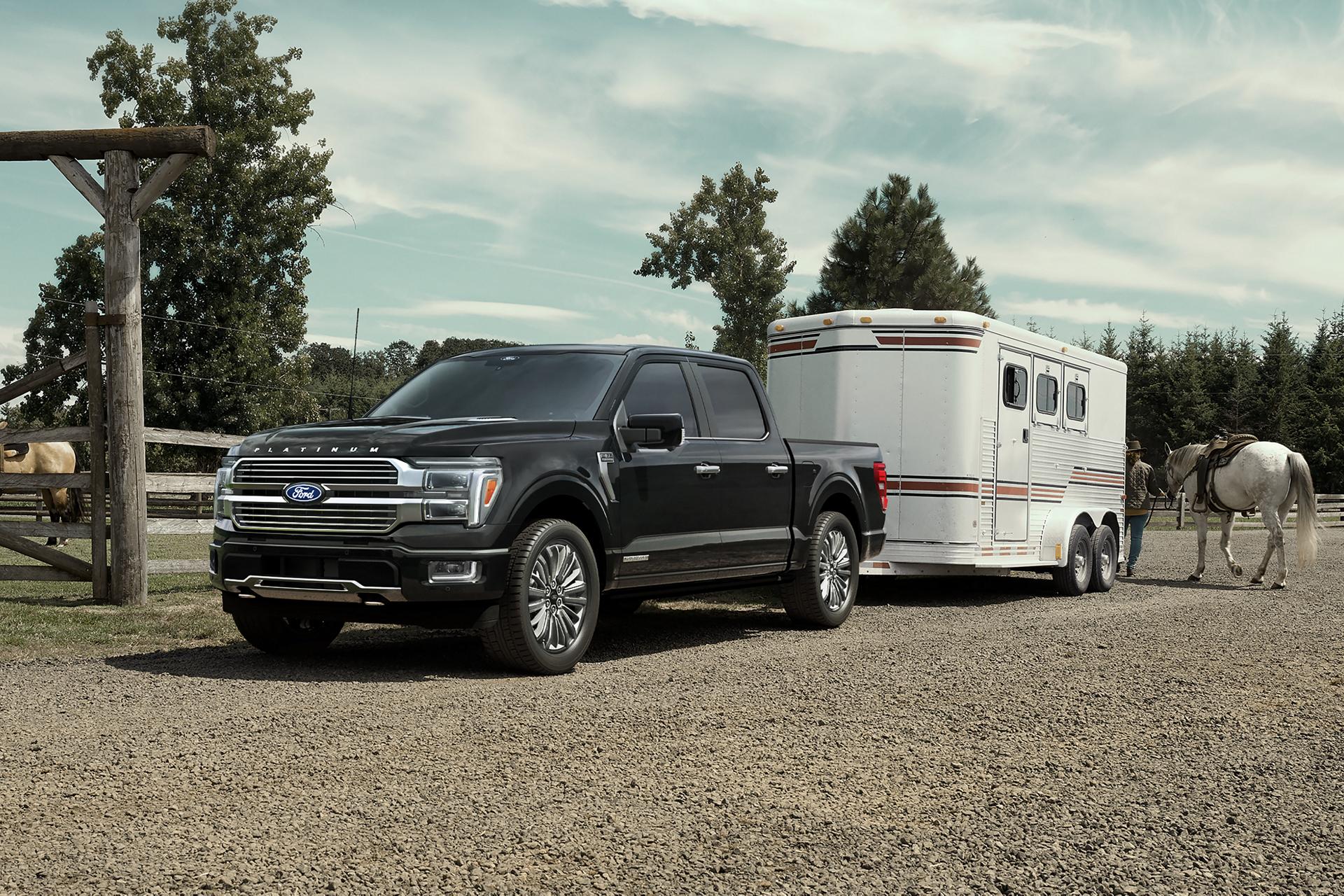
Ford's 2027 F-150 Towing Guide lists up to 12,100 pounds of available conventional towing for the 3.5L PowerBoost Full Hybrid V6 when properly equipped. The guide also lists a maximum available payload figure of 2,040 pounds for the engine entry, but payload and maximum towing are separate limits and should not be assumed to occur together on one truck.
The exact tow rating depends on cab style, bed length, drivetrain, axle ratio, packages, vehicle weight, passengers, cargo and accessories. A truck's headline maximum is not a substitute for checking the actual vehicle's certification label and the appropriate row in Ford's towing guide.
- Find the trailer's loaded weight, not only its empty or dry weight.
- Check the F-150's door-jamb payload label and account for passengers, cargo, accessories and tongue weight.
- Confirm the required towing package, axle ratio and hitch equipment are installed.
- Check trailer brakes, lights, tires, mirrors and weight distribution as appropriate.
- Allow for hills, crosswinds, stopping distance and changing weather on Oklahoma roads.
For buyers who tow regularly, bring the trailer details when shopping. Compare the exact truck's factory ratings with the loaded trailer and expected cargo.
Pro Power Onboard: truck-bed electricity for work and weekends
Pro Power Onboard is Ford's integrated exportable power system. Depending on the F-150's equipment, available configurations include 2.4 kW and up to 7.2 kW with the PowerBoost hybrid. That can make the truck useful for compatible corded tools, battery chargers, work lights and campsite equipment without bringing a separate portable generator for every task.
At the jobsite
Run compatible tools or charge batteries where an outlet is not convenient. Check each tool's running and startup wattage and stay within the vehicle's outlet and total system limits.
At the campsite
Power suitable lights, chargers and recreation equipment. Respect operating guidance and the truck's rated output.
Not every F-150 has the same Pro Power configuration. Outlet locations, voltage, amperage and total wattage depend on the package installed. Ask to see the actual truck's equipment and owner's manual before relying on it for a particular device.
For home outage planning, do not connect a truck directly to household wiring or backfeed a wall outlet. A compatible transfer device and professional installation are required for an approved home connection. Pro Power Onboard does not guarantee that every home circuit or appliance can run at once.
PowerBoost vs. a gas F-150: which setup fits?
The right F-150 powertrain depends on what you ask the truck to do most often. PowerBoost adds hybrid capability and available onboard power; conventional gasoline engines may be a better fit when their equipment, price or availability better matches your priorities.
| Your priority | PowerBoost Hybrid | Conventional gas F-150 |
|---|---|---|
| Hybrid-assisted driving | Yes; electric motor works with the gasoline engine | No hybrid motor assistance |
| Fuel-economy focus | Worth comparing when annual mileage is high; use exact EPA data | May fit lower mileage or different purchase priorities |
| Onboard electrical power | Available Pro Power Onboard, including up to 7.2 kW | Some gas configurations also offer Pro Power Onboard; output varies |
| Towing | Up to 12,100 lb in the 2027 guide when properly equipped | Maximums vary by engine and build; compare exact guide ratings |
| Ownership decision | Consider if hybrid operation and exportable power add real value | Consider if the gas configuration meets your needs at a better overall cost |
Questions to ask during a test drive
- Which 2027 F-150 trims currently offer the PowerBoost engine?
- Does this truck have the Pro Power Onboard output I need?
- What is the exact towing rating for this VIN and equipment package?
- What does the door-jamb payload label allow after passengers and accessories?
- How does its price compare with a similarly equipped gas F-150?
Ford F-150 PowerBoost Hybrid FAQs
Do I have to plug in the Ford F-150 PowerBoost?
No. PowerBoost is a full hybrid, not a plug-in hybrid. Its battery is managed by the vehicle's hybrid system and can recover energy through regenerative braking. You refuel with gasoline.
How much horsepower and torque does the 2027 F-150 PowerBoost have?
Ford's retail specifications list 430 horsepower and 570 lb-ft of torque. Ford's 2027 towing guide lists 420 horsepower and 570 lb-ft for its PowerBoost entry. The published horsepower figures differ between the documents; use the current guide and exact truck data for towing decisions.
What is the 2027 F-150 PowerBoost's maximum towing capacity?
Ford's 2027 F-150 Towing Guide lists up to 12,100 pounds when properly equipped. The rating varies by configuration, cargo, accessories and passengers.
What MPG does the F-150 PowerBoost get?
The EPA lists the 2026 F-150 4WD Hybrid at 22 city, 24 highway and 23 combined MPG. That is a 2026 rating, not a 2027 estimate. Check the EPA listing and window sticker for the specific vehicle.
How much power can Pro Power Onboard provide?
Available 2027 F-150 Pro Power Onboard configurations include 2.4 kW and up to 7.2 kW on properly equipped models. The actual outlet setup and output depend on the truck's equipment.
Can the F-150 PowerBoost power a house during an outage?
It can supply compatible electrical loads within its rated output. A household connection requires an approved transfer device and qualified installation; never backfeed a home through an ordinary outlet. It does not guarantee every home circuit can run at once.
Which F-150 trims offer PowerBoost for 2027?
Ford lists the 3.5L PowerBoost as available on select STX, XLT, Lariat, King Ranch and Platinum configurations. Availability depends on the exact build and current ordering or inventory.
Is PowerBoost a good choice for Oklahoma drivers?
It may be a strong fit if you want a full-size pickup with hybrid assistance, substantial torque and available onboard electrical power. Compare annual mileage, trailer needs, budget and exact equipment before choosing it over a conventional gas F-150.
Compare the Ford F-150 PowerBoost in Yukon, OK
Want to see whether PowerBoost is the right F-150 for your commute, trailer or workday? Explore available F-150 trucks and talk with the team at Joe Cooper Ford of Yukon about engine options, towing equipment and Pro Power Onboard configurations.
Visit us at 1780 Garth Brooks Blvd, Yukon, OK 73099, or call our sales team at (405) 792-0217.
Explore new Ford F-150 trucksContact our teamOfficial specifications and further reading
For current model-year details, use Ford's official specifications and towing documents and the EPA's vehicle-specific fuel-economy database. Confirm the exact vehicle and equipment before purchase or towing.